Seven Formula 1 performance lessons for risk leaders.
A practical checklist for improving decision-making, reducing complexity, and building a higher-performing risk function.
Improve risk performance with lessons from Formula 1.
Risk leaders are under pressure to help organisations move faster without taking unmanaged risks. But many risk and compliance processes still slow decisions down. Ownership is unclear, reporting is fragmented, data looks backwards and frontline teams struggle to see how risk connects to everyday performance.
This practical checklist distils seven lessons from Mark Gallagher and David Tattam’s GRC Edge conversation:
- Clarify decision rights so teams know when to act, escalate or seek approval
- Reduce process complexity that slows adoption, reporting and accountability
- Use risk data to look forward by distinguishing leading indicators from lagging measures
- Strengthen speak-up culture so risks, incidents and weaknesses surface earlier
- Connect risk to performance by linking risk appetite, objectives and decisions
- Turn lessons into action by identifying your top three improvement opportunities
Download your copy now.
Thank you for downloading Seven Formula 1 performance lessons for risk leaders. This practical checklist will help you assess where unclear ownership, fragmented reporting or unnecessary complexity may be slowing risk performance. Use it to review current practice, compare perspectives across teams and identify your top three improvement actions.
“Formula 1 shows that speed comes from preparation, clarity and trust in the data. Risk teams need the same foundations to help organisations act with confidence.”
Risk performance breaks down when clarity is missing
When risk management becomes too complex, the business starts working around it. Decisions wait for escalation. Teams duplicate effort. Reports show what happened, but not what needs attention next. Issues, incidents and near misses are recorded without always changing the system that allowed them to happen.
The result is not just more administration. It is weaker visibility, slower response and less confidence in decisions. Risk becomes something reviewed after the fact, rather than something that helps the organisation perform under pressure.
|
Fast decisions need preparation:
|
F1 teams make fast calls because roles, scenarios, thresholds and data are clear before pressure rises.
|
|
Complexity slows performance:
|
When processes multiply, teams spend more time managing risk administration than managing risk.
|
|
Visibility changes outcomes:
|
Leaders need current, connected risk information to act before issues escalate.
|
|
Risk is everyone’s role:
|
Performance improves when ownership is clear across executives, managers and frontline teams.
|
Comparing your options
Move from reactive, spreadsheet-based compliance to a connected, automated governance system - ready for the Aged Care Act 2024.
| Capabilities | Manual approach using spreadsheets | Protecht | ||
|---|---|---|---|---|
|
Incident & SIRS management
|
Incidents tracked manually, inconsistent categorisation, limited visibility, and no automated escalation. | Real-time logging and automated escalation aligned to SIRS, with full audit trails and reporting. | ||
|
Compliance & governance reporting
|
Separate spreadsheets per site; time-consuming updates; high audit risk. | Centralised dashboards and reports showing compliance across all facilities, in real time. | ||
|
Risk & quality oversight
|
Disconnected risk registers make trend analysis and board reporting difficult. | Integrated risk framework connecting controls, incidents, and actions to deliver organisation-wide visibility. | ||
|
Audit readiness
|
Manual evidence gathering across documents and emails - error-prone and stressful. | Pre-configured, auditable registers with one-click reporting and timestamped compliance evidence. | ||
|
Workflow & accountability
|
No clear ownership or task tracking; actions often lost in email. | Automated workflows with defined responsibilities, due dates, and escalation paths. | ||
|
Data security & integrity
|
Version control issues and risk of accidental data loss or breaches. | Secure, cloud-hosted platform with role-based access, encryption, and complete audit logs. |
KEY AUDIENCES
Who should read this?
|
Audience |
What you will learn |
|---|---|
|
CISOs and cyber security managers |
Get faster clarity on posture, ownership and assurance during incidents and audits. |
|
CROs, Heads of Risk and risk managers |
Connect cyber exposure to enterprise risk and operational impact in plain language. |
|
Compliance, audit and assurance leaders |
Reduce the scramble for evidence with a more repeatable, provable controls story. |
|
Operational resilience and business continuity leaders |
Treat cyber disruption as a continuity test, not just a security event. |
How Protecht helps
Move from fragmented risk administration to connected risk performance.
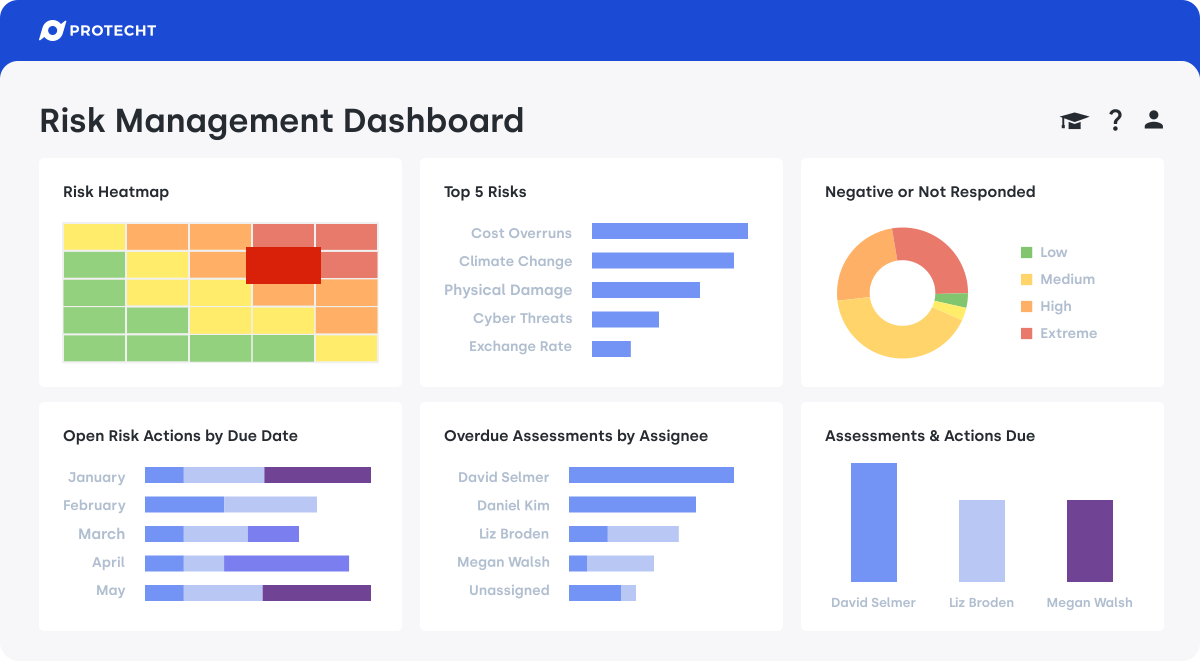
Protecht helps organisations connect risk, compliance, assurance and reporting in one platform, so teams can reduce manual effort, improve visibility and embed risk management into day-to-day operations.
That means you can:
- Connect risks, controls, obligations, incidents and actions so teams can see relationships instead of managing isolated registers
- Centralise reporting and dashboards so leaders get clearer visibility without stitching together spreadsheets
- Assign ownership and workflows so actions, escalations and reviews move forward with accountability
- Track issues and improvement actions so lessons learned become changes to controls, processes or training
- Embed risk into everyday activity so non-risk specialists can participate without unnecessary complexity