
A Protecht specialist will be in touch by email shortly to arrange a conversation about your GRC transformation: scope, migration, integrations and a credible first phase.
While you wait, watch Michael Howell and Simon Skinner's on-demand webinar, From business case to implementation, or see the workflows in action in our product tours.
ON-DEMAND WEBINAR
From business case to implementation: how to replace legacy GRC without losing momentum.


SPREADSHEETS AND EMAIL
Build a connected foundation.
Start with the process causing the most reporting pressure, audit friction or manual follow-up. Bring its records and owners together, then expand.
LEGACY GRC PLATFORM
Replace complexity without carrying it forward.
Define the target operating model first. Then decide which records move, which systems stay connected and which processes to redesign or retire.
~5 days a month saved on data entry.
First Central Group replaced a limited GRC system and spreadsheet analysis with linked actions, dashboards and automated reporting. Figure from the published case study.
Customer story
Read the story210% three-year ROI, seven-month payback.
Forrester Consulting's 2025 Total Economic Impact™ study, commissioned by Protecht, for a composite company modelled on interviewed customers. Study results, not a forecast.
Independent research
Explore the studyMake the business case for GRC transformation.
Identify quantifiable costs, realistic benefits and a stronger investment case.
On-demand webinar
Watch the sessionWHAT GOOD LOOKS LIKE
Connect the work. Keep decisions with people.
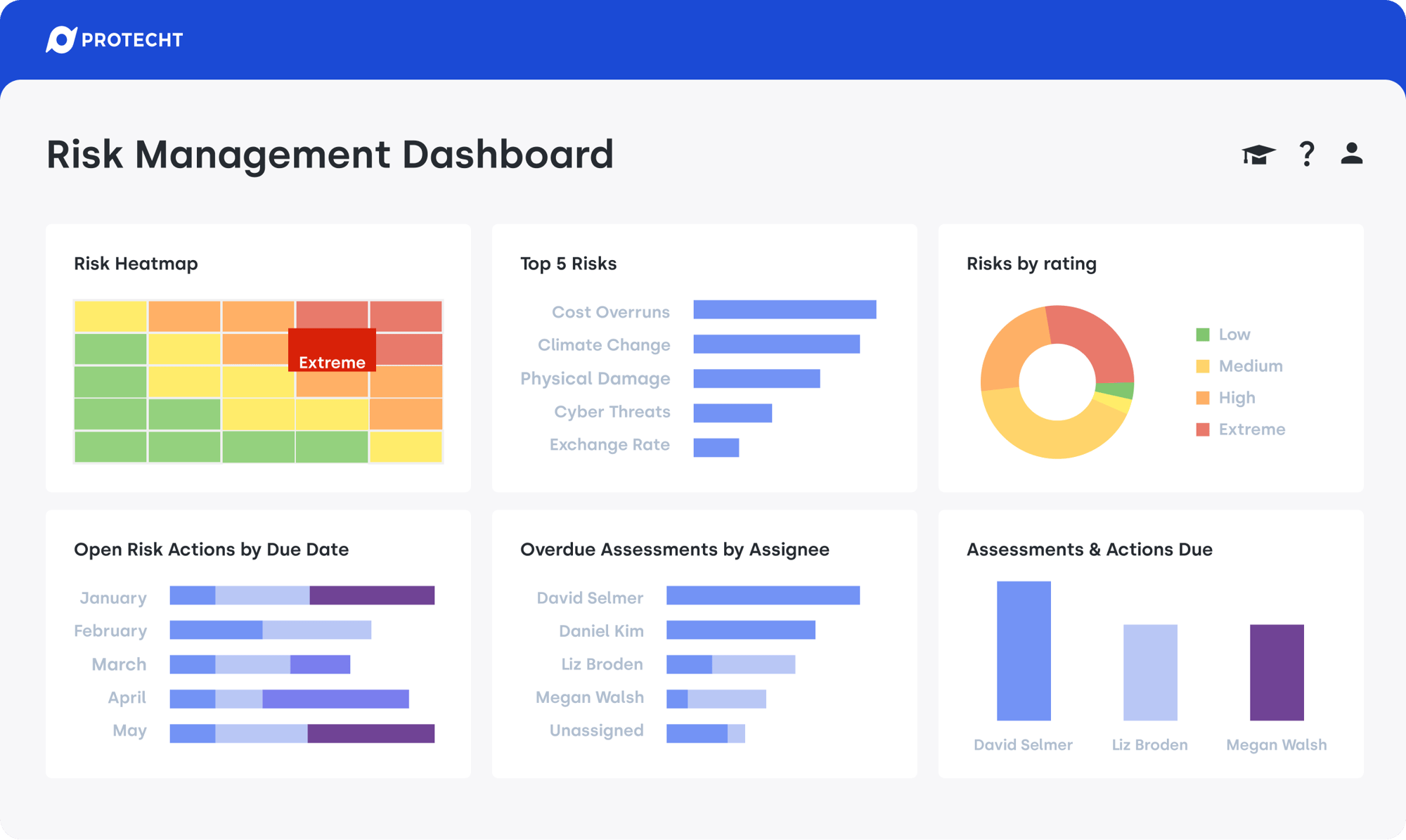
Information captured in daily work should support assurance, follow-up and management decisions without rebuilding the picture each time. Protecht is built for that model:
- Connected information: risks, controls, obligations, incidents and actions in related, governed records
- Workflows people use: reviews, evidence, escalation and reporting configured around how people work
- Cognita AI assistance: guidance at the point of work and AI-generated report summaries that your people review and approve
- Open connections: APIs and integrations, including Microsoft Teams and ServiceNow, so specialist systems stay authoritative.
PLAN THE CHANGE
Four decisions shape a better migration.
Don't copy a legacy environment into something new. Test each process, record and integration against four choices.
01
Move
What still has value?
Keep the records and relationships needed to run the process. Validate ownership, duplicates, evidence and permissions first, and treat historical data separately.
02
Integrate
Which system should own it?
Where another system is authoritative, connect the information GRC needs rather than duplicating the process.
03
Change
What should work differently?
Remove repeated entry and unnecessary steps, while keeping the reviews and approvals that protect governance.
04
Retire
What no longer helps?
Drop obsolete fields, duplicate registers and unused reports, keeping what audit, legal or regulatory retention requires.
DELIVER IN PHASES
Make the first phase meaningful and manageable.
Start small, but solve a recognised problem from end to end. An easy migration that leaves manual coordination in place proves the system works without delivering much value.
- Define the outcome: agree what must improve – reporting time, evidence traceability, overdue actions or rework – and record a baseline
- Choose a complete first use case: pick a high-friction workflow with clear boundaries, including its reviews, exceptions, actions and reporting
- Decide what belongs where, then test it: apply the four decisions and test with real users, evidence and exceptions, not just record counts
- Measure, learn and expand: compare results with the baseline, fix friction and use what works to scope the next phase.
THE NEXT STEP
Work out what should change first.
Bring your current GRC set-up, priority processes and open implementation questions. Protecht can help you scope migration, integrations and a credible first phase.
A Protecht specialist will be in touch by email shortly to arrange a conversation about your GRC transformation: scope, migration, integrations and a credible first phase.
While you wait, watch Michael Howell and Simon Skinner's on-demand webinar, From business case to implementation, or see the workflows in action in our product tours.